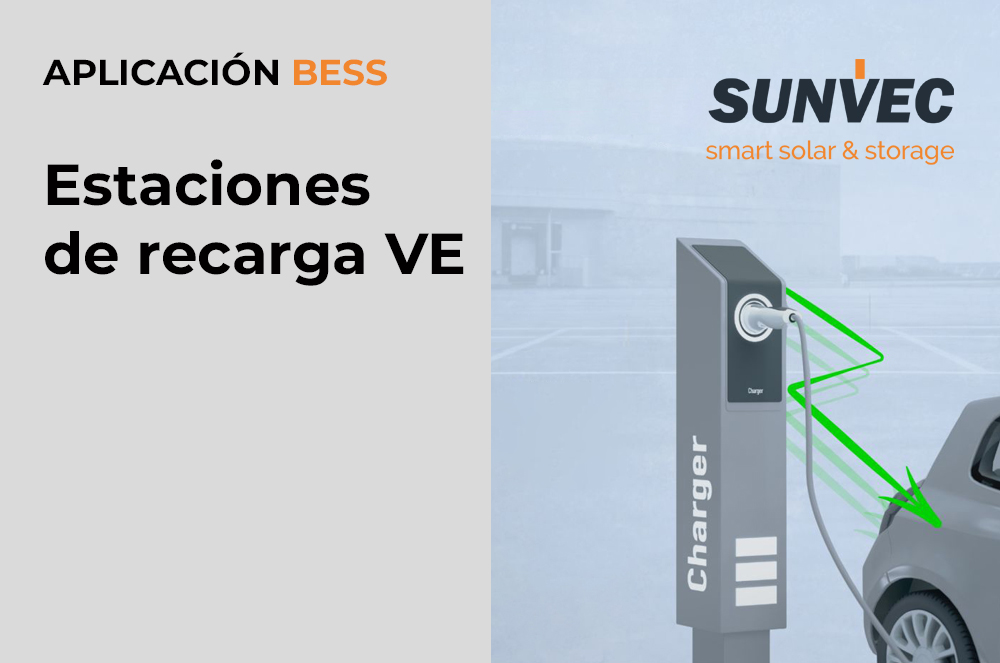
The rapid deployment of electric vehicle (EV) charging infrastructure in the C&I sector creates significant challenges in managing contracted power. The BESS acts as an energy buffer, enabling the deployment of efficient and cost-effective DC fast and ultra-fast chargers without the need to over-dimension the grid connection infrastructure.
Alexandre Morant, responsible for Renewable Energies products at Vector Energy
Article published in the No. 254 of the magazine Energética21
- The challenge of power and management demand charge in C&I
The electrification of fleets and the installation of hubs In C&I environments, load-balancing faces a key challenge: the instantaneous power demands of high-capacity DC chargers. The peaks generated by ultra-fast charging can greatly exceed the contracted power of the installation, resulting in:
- Penalties: Additional costs for excess power under the Spanish tariff framework.
- Infrastructure CAPEX: The need to request an expensive and time-consuming extension of the electrical grid, which entails higher fixed access tolls and a high initial investment.
The BESS solves this problem by acting as a “virtual charging station”. The system decouples the charging power of the EV from the power absorbed from the grid, allowing the company to optimize the demand charge (the cost of the contracted power) and the use of its point of connection (POC).
- The BESS operation: Peak Shaving dynamic to mitigate power spikes
The application of peak shaving dynamic It is the most immediate economic functionality of the BESS. Its objective is to limit the maximum network power.
- Monitoring and EMS: The Energy Management System (EMS) It is the brain, monitoring the net power of the network and the power requested by the chargers (OCPP protocol).
- Hybrid supply: When the combined demand (ship + chargers) approaches the contracted limit, the EMS calculates the deficit and orders the BESS to discharge at a C-Rate sufficient to cover the need (power discharge rate). The load on the VE is rapid and uninterrupted, while the facility's grid consumption remains stable and below the penalty threshold.
The BESS, which charges slowly from the grid during off-peak hours (P3) or with FV production in self-consumption facilities, manages instantaneous power, optimizing both fixed and variable costs.
- Technical Dimensioning and Energy Arbitrage
The correct sizing ensures profitability and functionality:
- Power of BESS (kW): It must be at least equal to the difference between the maximum power of the concurrent chargers and the target contracted power.
- BESS capacity (kWh): It is sized to cover the duration of the expected peak sessions, depending on the fleet usage pattern.
Additionally, the BESS facilitates price arbitrage within the Spanish tariff framework: it stores grid energy during off-peak hours (minimum cost) or during photovoltaic generation on the roof, and injects it into loads during peak hours when costs are higher. This arbitrage strategy, combined with the peak shaving, This accelerates the Return on Investment (ROI) of the BESS.
- BESS as a Facilitator of Intelligent Mobility and V2G
The BESS is not just a battery; it is a key element in active fleet management and smart charging (Smart Charging).
- FV integration and green charging: The BESS allows the storage of excess solar energy and prioritizes its use for the charging of EVs. This makes it easier for companies to meet their sustainability and carbon footprint reduction goals by maximizing “direct green load.”.
- Vehicle-to-Grid (V2G) and captive fleets: The BESS is the first step towards V2G. In captive fleets (logistics, buses, etc.), the BESS and vehicles can operate in a coordinated manner. When vehicles are parked and have battery capacity, they can return energy to the BESS or the C&I facility at times of high demand or high price. Although V2G regulation is under development in Spain, the bidirectional capability of the BESS and chargers prepared for V2G lay the foundations for this future monetization of the fleet.
The integration of the BESS solves the most pressing problem of deploying VE infrastructure in C&I: the power limitation. BESS systems become essential for the technical and financial viability of fleet electrification.
Looking to the future, these storage assets will not only benefit the individual company, but will be integrated into the global electricity system. The BESS in C&I, through demand aggregators, will be able to offer flexibility services to the grid (such as frequency or voltage regulation), turning the hub of load in a distributed resource and opening a new revenue channel through availability for the Spanish C&I sector.
More information about BESS storage solutions SUNVEC Storage














 Articles