In this video, we will delve into an aspect crucial to the lifespan and safety of power capacitors: the class of temperature.
The condensers for reactive power They are essential components in electrical systems, but their performance and durability are closely linked to temperature. It is vital to understand how temperature affects the lifespan of these devices and how to keep them within safe limits to avoid serious damage, including the risk of rupture.
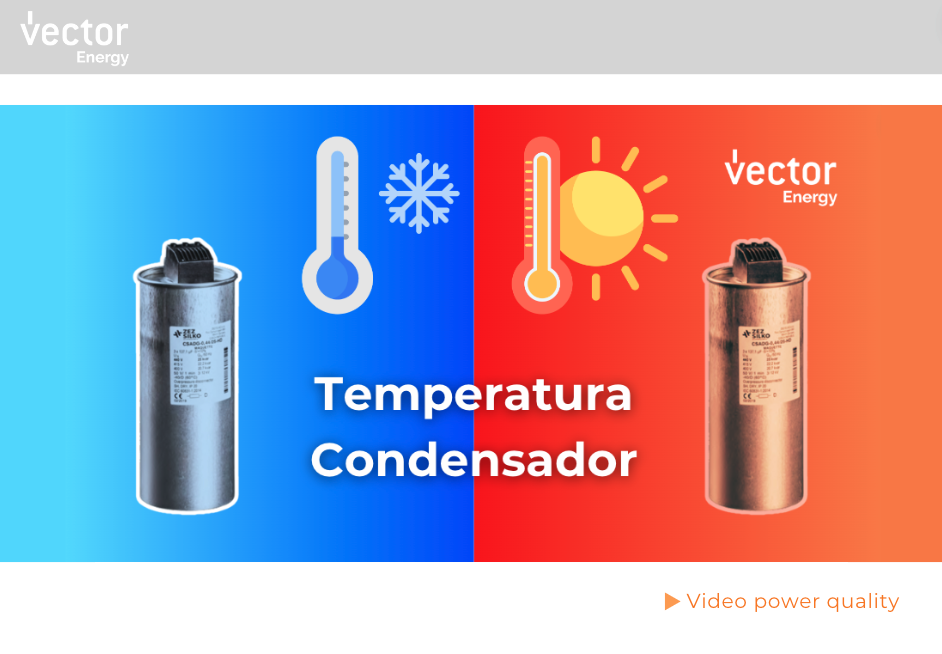
The temperature class of a condenser indicates the maximum and minimum temperatures it can withstand continuously without compromising its structural integrity or performance. Exceeding this limit can lead to an accelerated deterioration of the capacitor, increasing the risk of catastrophic failures.
It is important to understand that on the one hand the minimum temperature is indicated and on the other the maximum temperature is designated with a letter such as -40/D.
This letter “D” indicates the maximum temperature limits, The daily and annual averages that the condenser must work at.
If you want to know how to obtain this data, we have provided a video here that explains how to read the characteristics plate of a capacitor. • Plate with characteristics of TRIFOLD TUBULAR CONDENSATOR
And also a Catalog of the different models available Vector Energy.













![[Technical Article] Capacitors for power factor correction: what really matters in Low Voltage](https://vectorenergy.com/wp-content/uploads/2026/02/not_2026_02_06_condensadores.jpg) Articles
Articles