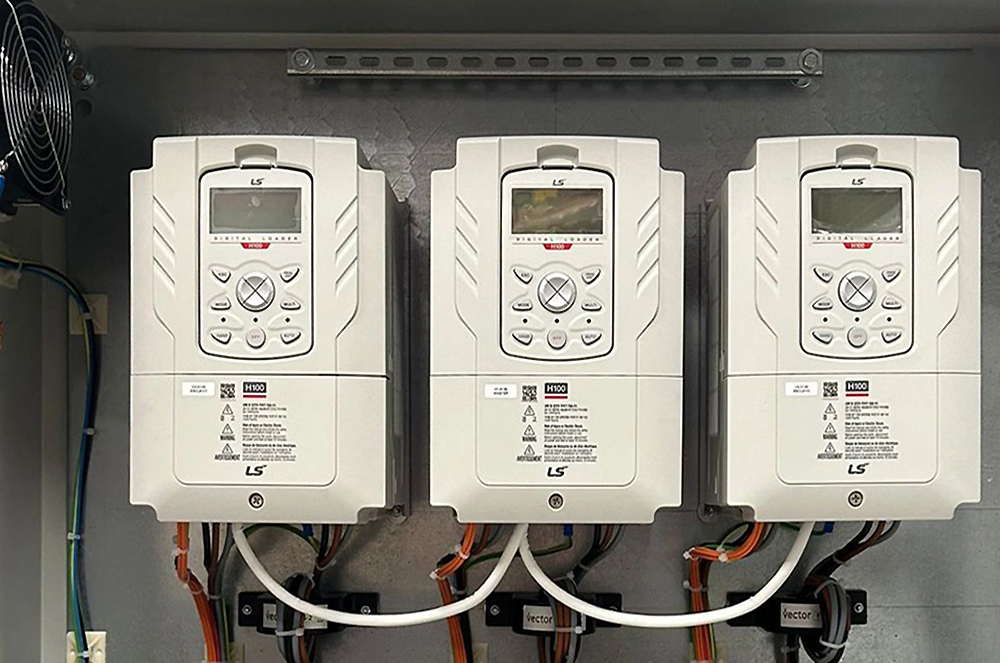
Have you ever wondered why your electric motor, connected to a speed controller, breaks down prematurely?
This is a common problem that many electric motor owners and operators face. In this video from VECTOR ENERGY, we will unravel the reasons behind this situation and offer practical solutions to protect your equipment.
What is a speed variator and how does it work?
Speed variators are devices that control the speed and torque of electric motors, allowing the motor performance to be adjusted to the specific needs of the application. Although these devices offer many benefits, they can also be the cause of various problems if not used correctly.
Common problems with motors and speed controllers
· Overloads
One of the most common problems is the generation of overvoltages and harmonics. Speed regulators can induce high voltage spikes (dv/dt) that damage the motor's insulation. These voltage spikes can generate excessive heat and eventually lead to motor failure.
· Electrical noise and interference problems
Another important problem is electrical noise and electromagnetic interference that can affect other nearby electronic equipment. This noise is generated by the rapid switching pulses of the speed controllers.
Solutions
dv/dt filters: To mitigate these voltage spikes, dv/dt filters can be used. These filters are essential for reducing the voltage change rate and protecting the motor insulation.

Senoid Filters: To reduce electrical noise, sine wave filters are very effective. These filters smooth out the output waveforms of the inverter, producing a signal that is more similar to a pure sine wave, which significantly reduces noise and interference.

In short, Electric motors connected to speed controllers can malfunction due to overvoltages, harmonics, and electrical noise. To protect your motors, it is essential to use output filters for speed controllers, including dv/dt filters and sine wave filters. Additionally, regular maintenance and constant monitoring are key to ensuring the longevity and optimal performance of your equipment.
Full video;
Anglia Vector Energy is committed to helping you solve these problems and keep your engines running efficiently and reliably. If you have any questions or need more information, please do not hesitate to contact us.
Protect your investment and ensure the proper operation of your electric motors!









 Articles