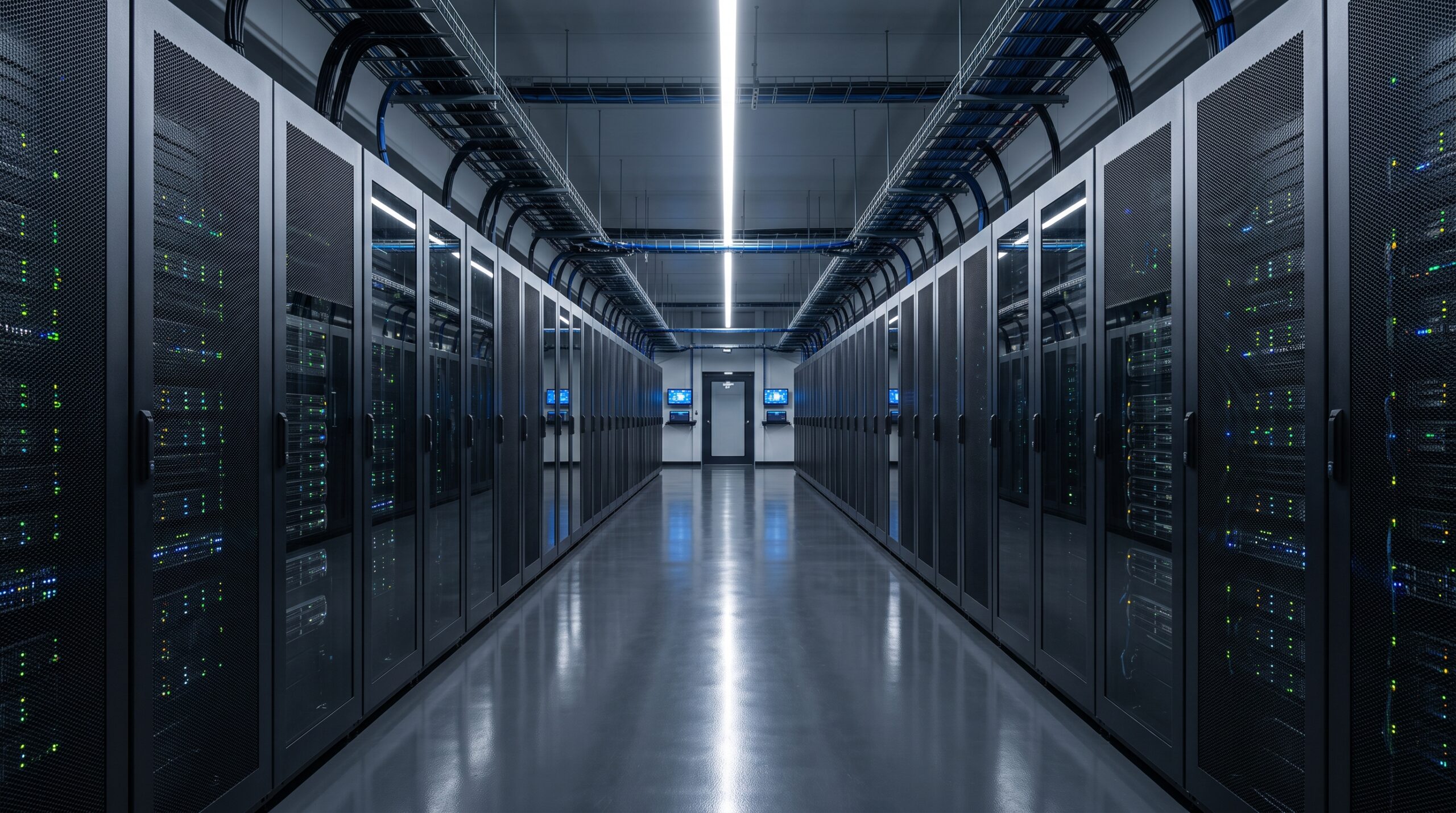
The Spanish digital infrastructure, driven by data centers (Data centers), requires continuous energy availability. In the commercial and industrial sector, the BESS not only offers self-consumption optimization or price arbitrage, but also positions itself as the key element for the operational safety of the facilities, assuming long-lasting and high-efficiency SAI functions to meet the most demanding resilience standards.
Alexandre Morant, responsible for Renewable Energies products at Vector Energy
Article published in the Issue 250 of the magazine Energética21
- The transformation of the concept of resilience in mission-critical facilities
The datacenter It represents the paradigm of energy consumption with the highest requirement for reliability in the C&I segment. The investment in these centers is directly proportional to their classification according to their level of availability and redundancy (Tier), with four incremental levels according to the ANSI/TIA-942 standard. The highest level (Tier IV) implies a total fault tolerance, guaranteeing a availability of over 99.995%. To achieve these levels, redundancy in the supply is vital.
Traditionally, this redundancy was achieved through SAI systems (Standby Power Supply System), whose function is to protect the short-term supply, generally backed by large diesel generators. However, this architecture has drawbacks, including the short duration of the backup and the carbon footprint of diesel. This is where the BESS emerges as a provider of sustainable resilience.
The BESS is inherently a bidirectional system that, in addition to offering medium- to long-term backup power and eliminating or reducing the use of generators, is designed to integrate with the electrical grid and renewable generation through an advanced energy management system (EMS). This allows, beyond resolving the drawbacks of SAI systems, the economic optimization of the system through the use of work modes such as peak-shaving or arbitrage.
- Technical requirements of the BESS investor for data centers
The most critical component of the BESS for this type of application is not primarily the battery capacity, but the bidirectional power inverter (PCS) and the energy management system:
- Seamless transfer: The switch between the supply of the electrical grid and the power supply of the BESS in case the former fails must be sub-millisecond given that mission-critical IT equipment does not tolerate interruptions. The interruption of the supply, even for a few milliseconds, can cause the equipment to restart or fail. Therefore, the industry standard requires systems that operate with zero transfer time.
- Grid Forming and Power Quality: Beyond switching, the inverter must have grid-forming capability, that is, it must be able to detect the grid anomaly and create a robust voltage and frequency reference to power critical loads. In addition to this grid-forming capability, quality must be ensured by limiting the total harmonic distortion (THD) to values typically below 3% during island mode operation. This ensures the protection of the delicate electronics in servers against harmonics and microfluctuations. This is crucial, as IT equipment and servers are extremely sensitive to wave disturbances, which can cause hardware failures and inefficient operation.
- Dual operational command: The energy management system (EMS) must manage the BESS under a very strict framework of priorities that balances safety and economic optimization. As a priority one, safety and backup are found, maintaining the minimum SOC reserve for the worst-case scenario of a power grid outage. As a priority two, economic optimization is used, utilizing the remaining capacity to operate in self-consumption mode, peak-shaving, or arbitrage.
- Integration with self-consumption FV, peak-shaving and arbitrage
The primary need of data centers is uninterrupted energy availability (resilience). Precisely, it is the dual nature of the BESS that makes it a strategic asset: while the grid is active, the system operates with an economic management mandate to accelerate depreciation. Integration with PV generation, cost reduction through energy arbitrage (taking advantage of hourly discrimination) and peak-shaving to optimize contracted power are essential applications that allow extracting the maximum economic return from the investment.
- Infrastructure enablement (peak shaving): Peak shaving is vital to the viability of infrastructure. The high power demand of a data center often requires an expensive and time-consuming expansion of the electrical grid. The BESS is sized to operate in a limiting mode, using stored energy to cover power peaks that exceed the available connection threshold. This enables the project to be built, solving the infrastructure bottleneck and drastically reducing initial investment (CAPEX).
- Arbitration, self-consumption and ROI: Within the Spanish tariff framework with hourly discrimination, the BESS allows for price arbitration (charging during off-peak hours and discharging during peak hours). Integration with the FV maximizes the direct self-consumption factor and enables compliance with internal Power Purchase Agreement (PPA) objectives by ensuring the availability of renewable energy even during non-sunny hours. The analysis of Return on Investment (ROI) should include peak shaving and arbitration savings, which accelerates the amortization of the BESS.
- Future monetization: Flexibility services (Frequency Regulation): The ultra-fast response performance of the BESS serves not only for back-up purposes, but also for participation in the demand response services (DRS) of the electricity grid. The figure of the Distributed Resource Aggregator (DER) is advancing in Spain, allowing assets such as the BESS from the C&I sector to offer frequency, voltage or power factor regulation services. This service creates a new revenue stream for an installation like the datacenter, By positioning the high specification of the BESS as an investment in a profitable infrastructure in the long term.
- Security and thermal management
In a mission-critical application like the one in question, Data centers Safety and thermal management take on utmost importance. A failure of the BESS equipment represents a disruption of the backup and, therefore, a direct risk of data loss or operational continuity. This risk must be minimized at all costs, with a design that must prioritize the constant monitoring of the cells and the implementation of specialized gas extinction and detection systems.
- Battery Management System (BMS): Monitors the voltage, current, and temperature of each cell and module. In the event of any deviation outside the safety thresholds, the BMS initiates shutdown protocols and isolates the source of the problem, ensuring the integrity of the system and continuity in operation. This predictive diagnostic capability is vital for mitigating the risk of failure.
- Thermal management system (TMS): The objective of the thermal management system is to cool the BESS, either through liquid cooling or forced air cooling, to keep the temperature within the operating range. Deviations outside this range drastically reduce the lifespan of the cells and, in extreme cases, can lead to thermal leakage.
- Risk mitigation: The design and installation of the BESS must comply with specific industrial safety regulations (e.g., NFPA 855) that govern the separation between racks, emergency ventilation systems, or systems for detecting thermal leakage and fire extinguishing gases. These requirements are non-negotiable to protect the most valuable asset of an datacenter: the continuity and integrity of the data.
- Cybersecurity: The BESS is a critical asset of the datacenter’s Operational Technology (OT) network. While the European NIS2 Directive (whose objective is to ensure cybersecurity) applies directly to the datacenter as an essential entity, this regulation indirectly imposes design requirements on its energy support infrastructure. It is vital that the BESS and its Energy Management System (EMS) have robust protocols (e.g., communications encryption, authentication, network segmentation) to prevent cyberattacks that compromise the availability of energy or the security of datacenter.
In conclusion, the BESS has transcended its initial role as an energy storage system to become a strategic asset in the C&I segment. Its ability to supply critical loads, solve network infrastructure bottlenecks, and generate additional savings make it a key player in the operation of Data centers and in the flexibility of the electrical system in general.
More information about BESS storage solutions SUNVEC Storage







 Articles