Electric vehicle charging stations and BESS: more power with a limited network
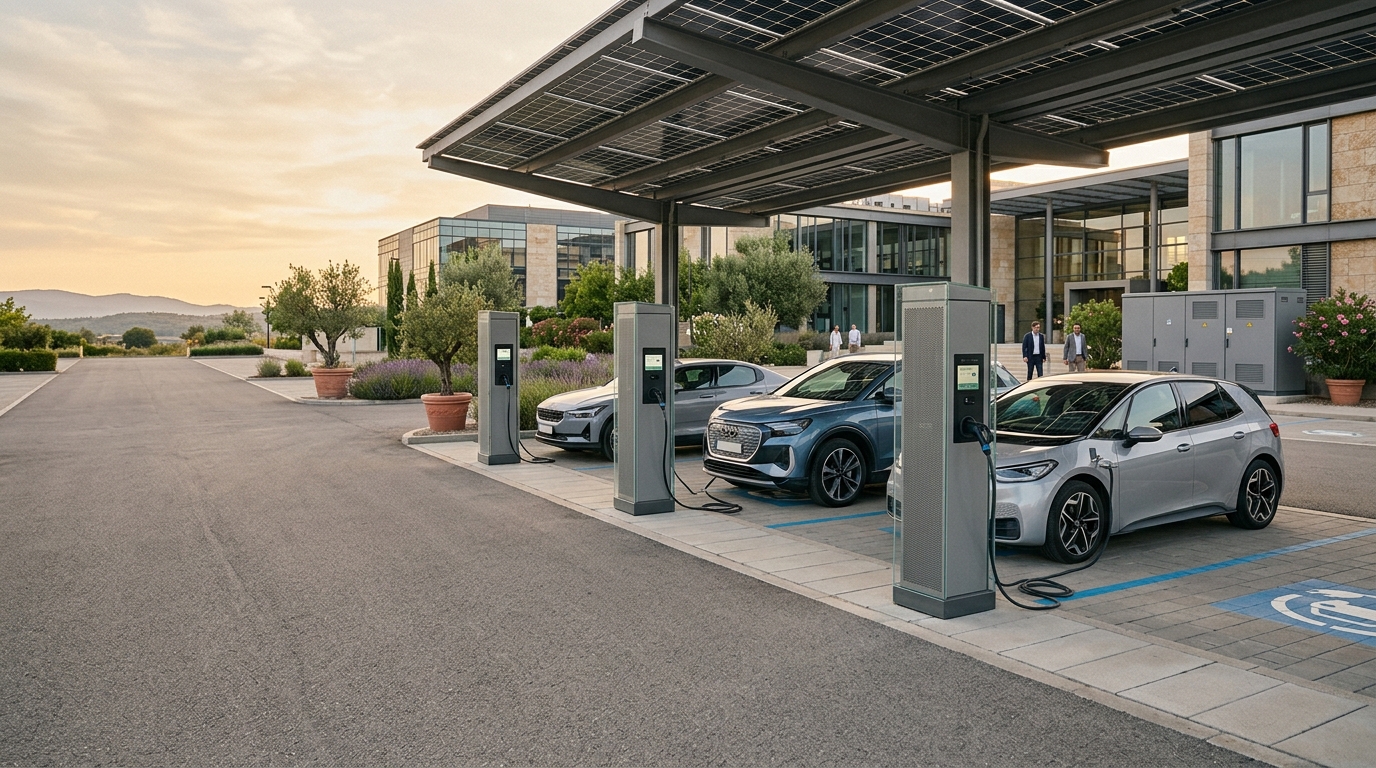
The electrification of fleets, parking areas, and service areas is increasing the power required in many facilities. Simultaneous charging of multiple vehicles can generate high peaks and require an expansion of the connection point. Integrating a BESS into a charging station allows for managing these needs more flexibly and better utilizing the existing infrastructure.
The battery is charged when demand is low or when photovoltaic energy is available. When several chargers request power at the same time, the BESS provides a portion and limits the energy drawn from the grid. This function, sometimes known as power boosting, does not increase the contracted power, but does allow for temporary coverage of demand exceeding the capacity available at the supply point.
Dynamic management of recharging
The EMS coordinates the network, the battery, the chargers, and, when available, the photovoltaic generation. It can also apply priority rules based on the type of vehicle, the scheduled departure time, the charging status, or the electricity tariff.
Dynamic management prevents the sum of the chargers from exceeding the set limit. If the battery has energy, it completes the necessary power; if it reaches its limit, the system reduces the charging power in an orderly manner to protect the installation.
Main benefits
· Limitation of peak demand: reduce the impact of simultaneous recharging on the supply.
· Possible postponement of expansions: It can avoid or delay certain investments in start-up, transformation or internal distribution.
· Greater integration of photovoltaics: The excess solar energy can be stored and subsequently used for powering the vehicles.
· Cost optimization: The battery can be charged during favorable periods and support recharging during times of higher cost.
· Deployment in locations with limited power: facilitates the installation of quick charging where the network cannot continuously deliver all the required power.
· Better user experience: It allows for more sessions to be attended or for higher power to be maintained during periods of high demand.
Power, energy and simultaneity
The sizing should be based on mobility data: number of vehicles, power of each charger, simultaneity, duration of sessions and time available for recharging the BESS. A battery with a lot of energy but little power will not cover a quick recharge; a very powerful but small battery will only support the power for a short period of time.
The efficiency of the cycle, degradation, temperatures, and the expected growth of the fleet must also be considered. In facilities open to the public, the availability and charging strategy of the BESS itself are especially relevant to prevent it from running out of power before a peak demand occurs.
An integrated energy infrastructure
The combination of charging, photovoltaics and storage turns the parking lot or station into a manageable energy system. In addition, the BESS can provide other services when it is not supporting the chargers, such as reducing overall building peaks or increasing self-consumption.
At Vector Energy, we design BESS solutions coordinated with the charging infrastructure and the electrical limits of each site. The result is a more flexible, scalable installation that is prepared to accompany the growth of electric mobility.
Learn more: sunvec.es/storage













 Articles