Networks and telecommunications stations: ensuring operation in the event of power outages with BESS
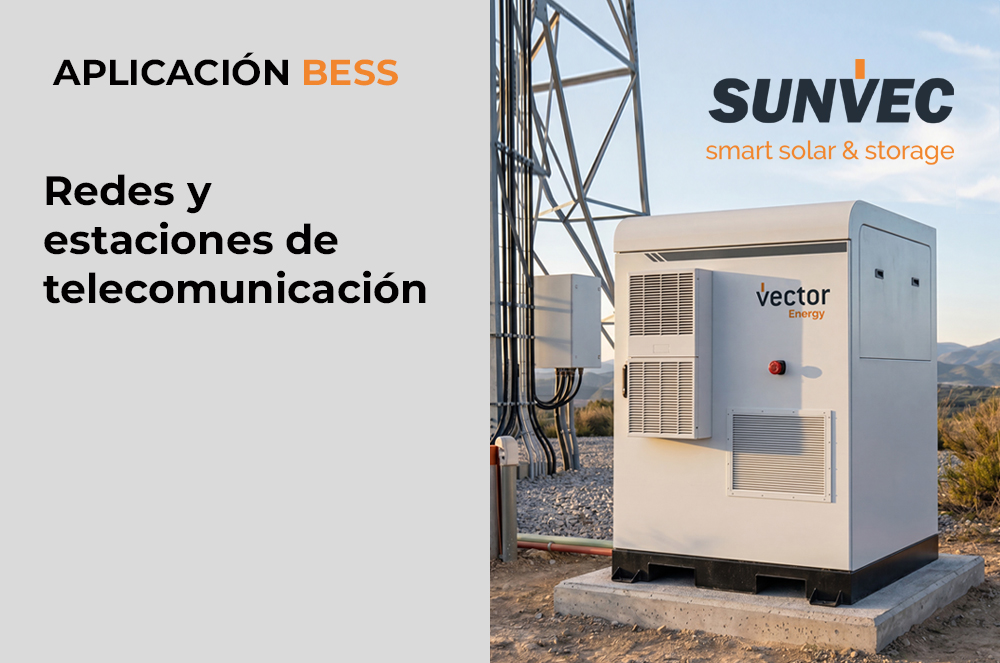
Telecommunications networks are an essential infrastructure, especially during emergencies, extreme weather events or power outages. Antennas, base stations, communication nodes and transmission equipment need to maintain service even when the mains power fails. A BESS allows for local energy backup and strengthens the operational continuity of these locations.
In the event of a disruption, the battery delivers power to critical loads and reduces or prevents the immediate loss of communications. The battery’s range can be adapted to the consumption of the site, the level of criticality, the planned time of intervention, and the availability of other sources, such as photovoltaic panels or generators.
Automatic response to an incident
The system continuously monitors the network and the charging status. When it detects an anomaly, it activates the planned backup strategy and keeps the selected devices powered. Upon recovery of the power supply, it manages the reconnection and recharging of the batteries.
In remote locations, remote monitoring is essential. The operator can check alarms, temperature, estimated autonomy, cycles, and the status of the modules, reducing travel time and facilitating preventive maintenance.
Benefits for telecommunications operators
· Continuity of service: keeps critical nodes operational during supply failures.
· Scalable autonomy: The capacity can be adapted to micro-cuts, prolonged incidents, or the arrival times of technical staff.
· Fast and automatic response: reduce the risk of service downtime during the transition.
· Lower fuel dependency: It can reduce the operating hours of generators and the associated logistics.
· Renewable integration: in locations with photovoltaic systems, it stores energy to use when there is no solar production.
· Remote management: It facilitates the monitoring of a distributed network of stations and the early detection of problems.
BESS hybrid with photovoltaic and generator
In isolated stations or with weak networks, the combination of BESS and photovoltaics can reduce fuel consumption and increase autonomy. The battery absorbs solar variability and maintains a stable power supply. If a generator is present, the system can start it only when necessary and operate it more efficiently.
This architecture also provides resilience against simultaneous incidents: a prolonged network failure, low solar production, or difficulties accessing the site. The EMS decides which source to use and can implement savings modes to extend the service of the priority functions.
Design for demanding environments
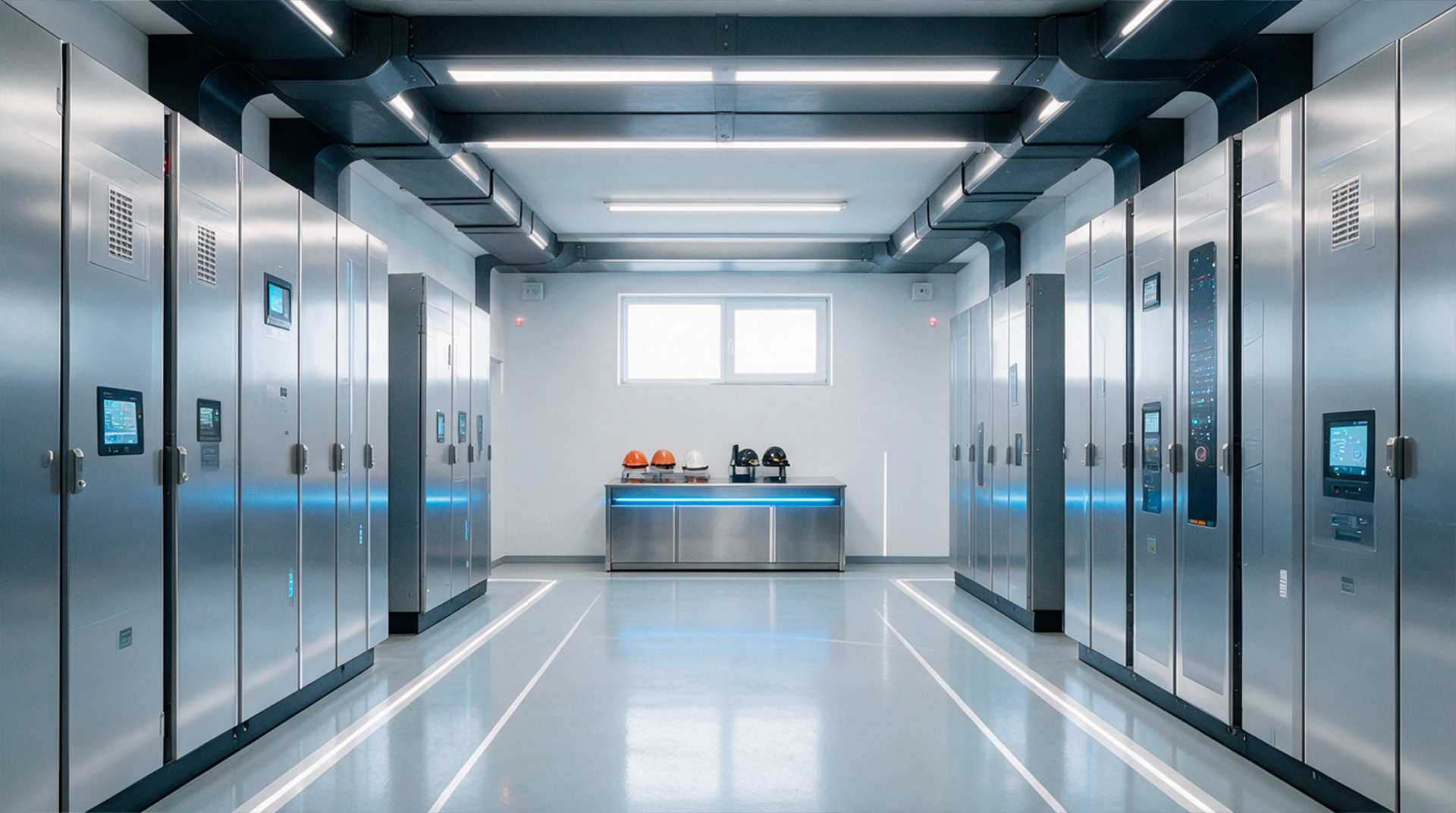
Telecommunications stations can be exposed to extreme temperatures, dust, humidity, vandalism, or difficult access. The solution must include enclosure, cooling, security, redundant communications, and ease of maintenance. It must also consider battery degradation and ensure a minimum reserve, preventing other cost-effective applications from compromising the backup.
At Vector Energy, we design scalable BESS solutions for telecom networks and locations, with intelligent control and remote monitoring. Storage enables to strengthen service continuity, integrate renewable energy, and increase autonomy in the event of outages, contributing to safer and more resilient communications.
Learn more: sunvec.es/storage









 Articles