In this article, we highlight the main functions and characteristics of peak shaving within the energy management strategy of a BESS system in a commercial and industrial (C&I) environment.
Peak shaving with BESS: how to reduce energy demand peaks
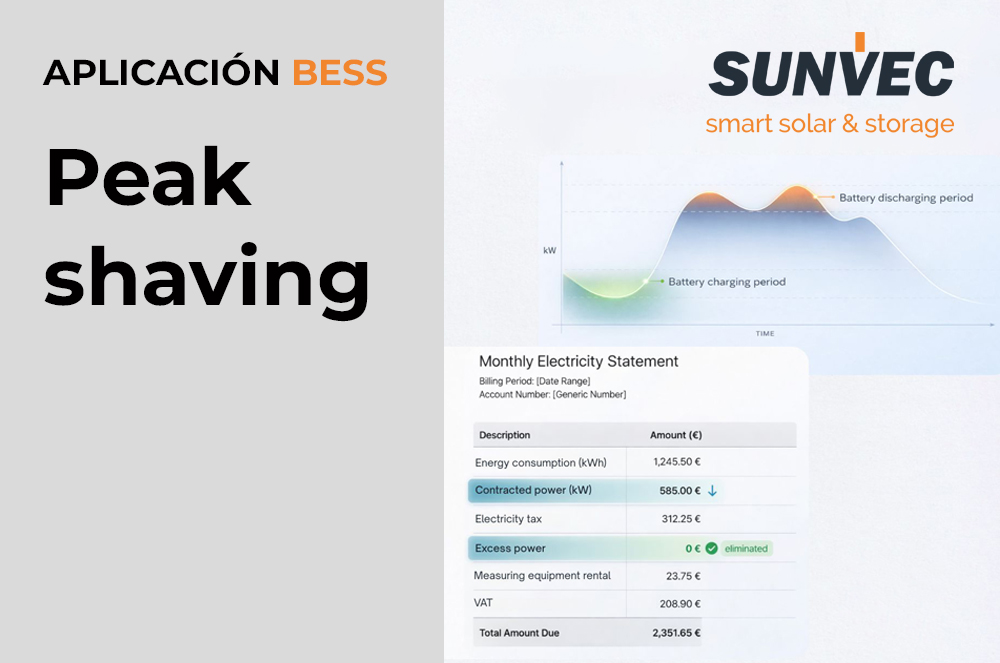
Peak shaving, or demand-side reduction, is an energy management strategy that allows limiting the power that an industrial or commercial facility demands from the electricity grid at certain times. To do this, an energy storage system with batteries (BESS) supplies part of the necessary energy when consumption exceeds a previously set threshold.
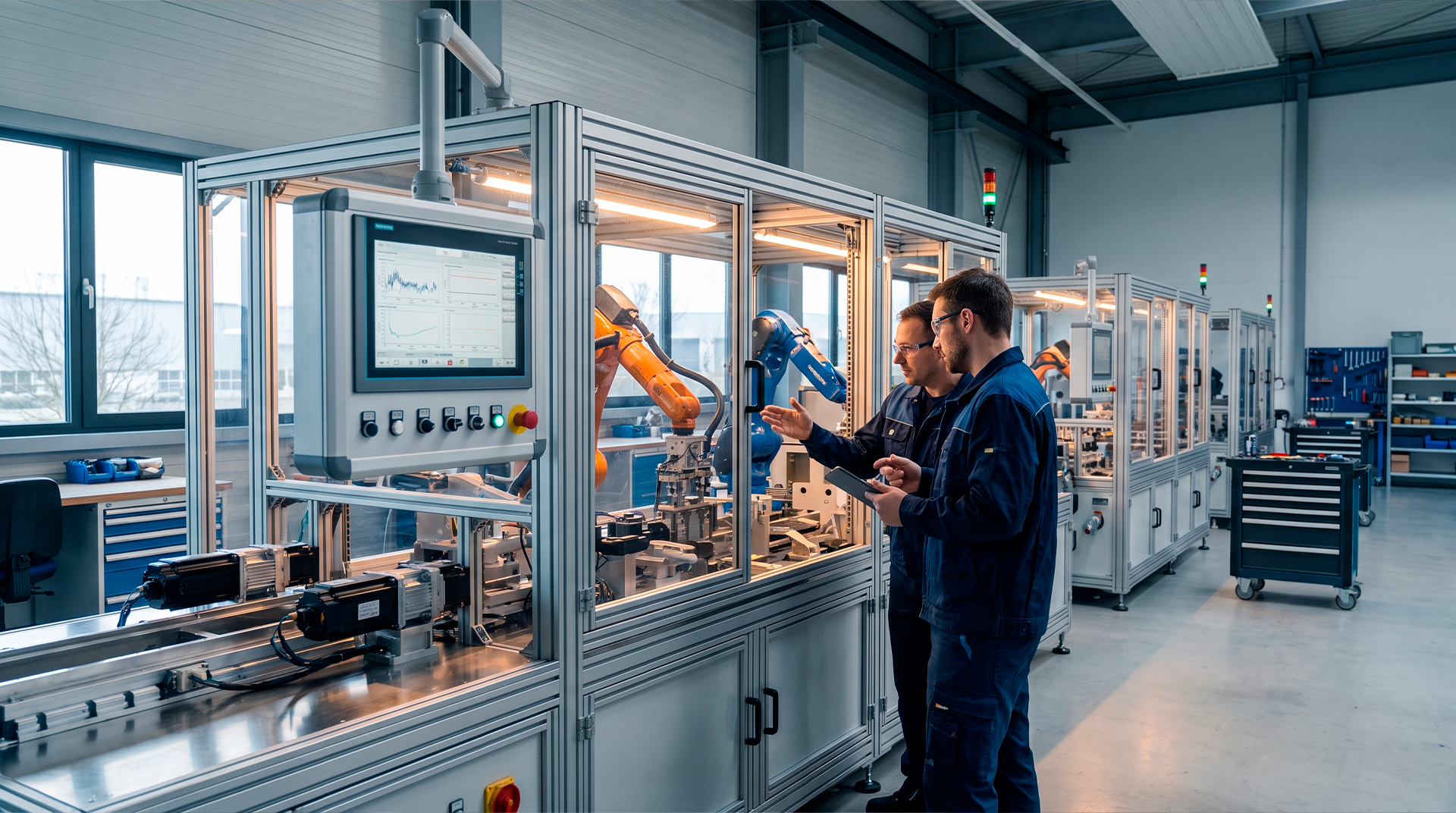
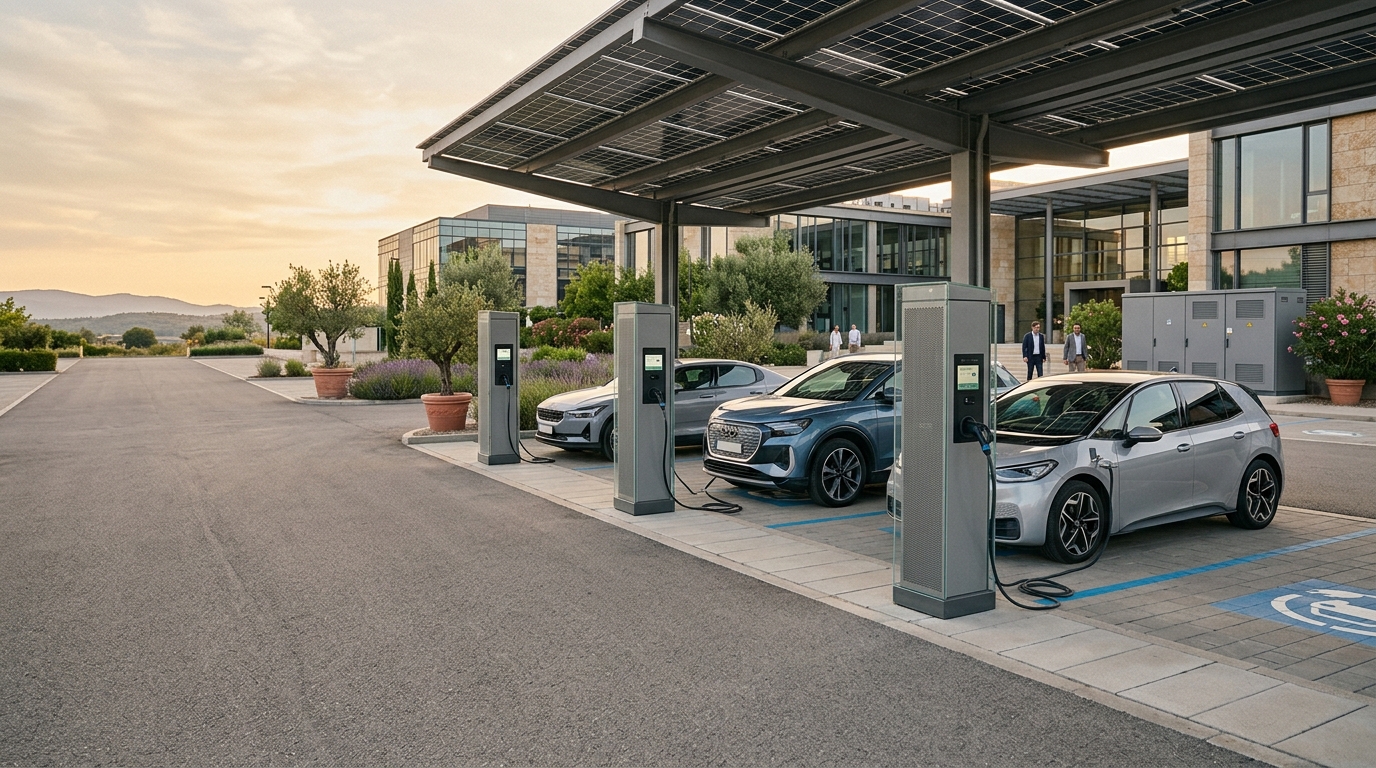
During periods of lower demand or when there is an excess of photovoltaic generation, the BESS stores energy. Subsequently, when a peak in consumption occurs—for example, due to the simultaneous start-up of machinery, air conditioning equipment, pumps, or electric vehicle chargers—the batteries are discharged to supplement the grid supply.
In this way, the installation can meet its energy needs without reaching high levels of power demand.
How does peak shaving work?
The energy management system continuously monitors the installation’s consumption and automatically controls the charging and discharging of the BESS:
1. Consumption remains below the set threshold: the BESS remains available or takes advantage of the moment to charge.
2. The demand approaches the limit: the system detects the increase in consumption.
3. The demand exceeds the threshold: the BESS provides the necessary power to reduce the energy requested to the grid.
4. Consumption returns to normal levels: the battery stops discharging and recovers its charging state according to the programmed strategy.
The entire process is performed automatically and can be adapted to the schedules, tariffs, load curves, and operational characteristics of each installation.
Main benefits of peak shaving with BESS
Reduction of costs associated with power
By limiting peak demand, the BESS can help optimize contracted power and reduce costs associated with power overages, always in accordance with the tariff and the terms of the electricity contract.
Greater stability in energy management
The battery acts as a flexible resource capable of responding quickly to increases in consumption, smoothing the load curve and preventing certain processes from causing pronounced spikes.
Better utilization of the photovoltaic installation
When the BESS is combined with solar self-consumption, it can store the excess photovoltaic energy and use it later during periods of higher demand. This increases the utilization of the renewable energy generated within the installation itself.
Reduction of pressure on the electrical grid
A more stable demand contributes to reducing congestion and stress on the network, especially in facilities with high consumption or loads that can be concentrated in very specific periods.
An alternative to certain infrastructure expansions
In some projects, the BESS can facilitate the addition of new loads—such as machinery, air conditioning systems, or charging points—without all the additional power having to be supplied simultaneously from the grid. This can avoid or delay certain expansions of the grid or electrical infrastructure.
Compatibility with other applications
The same BESS system can combine peak shaving with other strategies, such as shifting consumption to cheaper hours, energy arbitrage, smart self-consumption, the provision of flexibility services, or support in the event of supply disruptions.
A solution adapted to the consumption profile
For a peak shaving strategy to be effective, it is necessary to analyze the load curve of the installation, the duration and frequency of peaks, the contracted power, and the necessary storage capacity. The correct selection of the power and energy of the BESS is essential to ensure that it can cover the peaks without compromising its availability for other functions.
At Vector Energy, we design BESS solutions adapted to the characteristics and objectives of each installation. The analysis of consumption and the intelligent configuration of the system allow the battery to be converted into an active tool for optimizing costs, improving energy efficiency, and increasing operational flexibility.
Learn more: sunvec.es/storage











 Technical articles