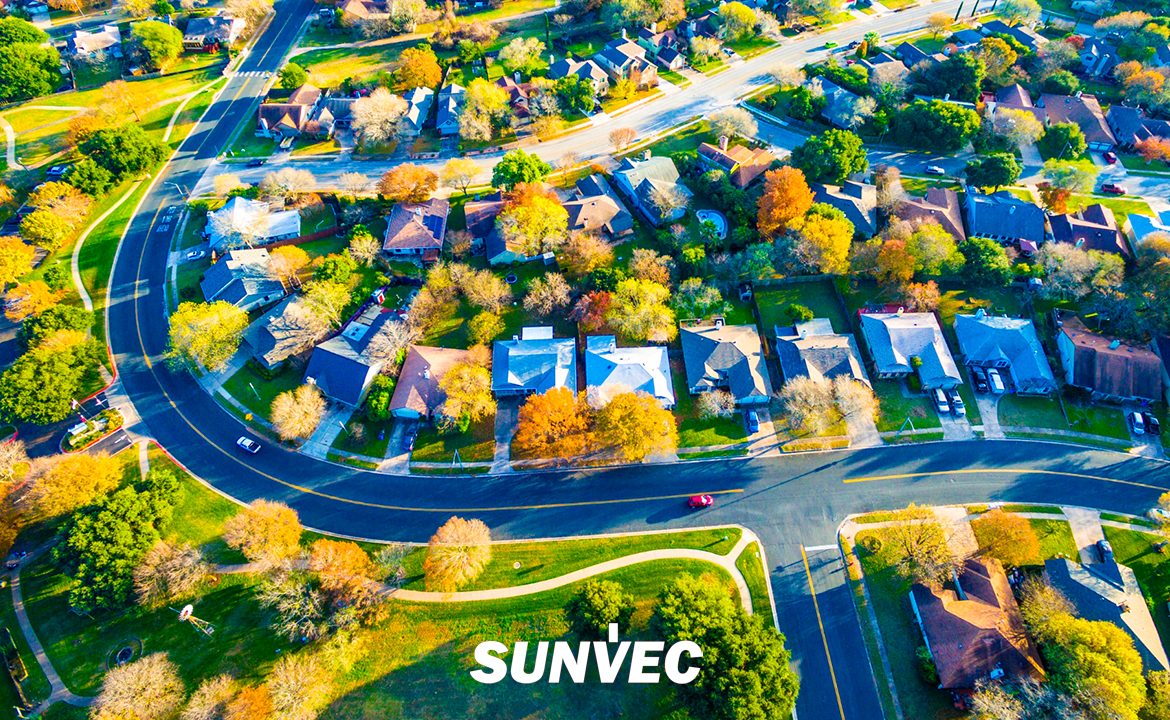
Shared self-consumption for neighborhood communities, supported by the legal framework of Royal Decree 244/2019 of April 5, positions itself as an efficient and collaborative solution in the transition towards more sustainable energy sources. This model not only offers an environmentally conscious alternative, but also presents itself as a valuable strategy for neighborhood communities and residential environments.
Understanding Shared Self-Consumption
In essence, shared self-consumption takes place when a group of consumers joins together to take advantage of the electricity generated by facilities close to their points of consumption. This collaborative approach allows several households or residential units to benefit from a cleaner and more efficient source of energy.
Advantages for Neighborhoods
Cost Reduction: Sharing energy generation among multiple neighbors can lead to a significant reduction in the costs associated with electricity supply. Equitably sharing the benefits derived from photovoltaic generation, for example, can generate considerable savings for each residential unit.
· Environmental Sustainability: By opting for shared self-consumption, neighborhood communities actively contribute to reducing their carbon footprint. The decentralized generation of energy, preferably from renewable sources, promotes a more sustainable and environmentally friendly environment.
· Promotion of collaborationThe implementation of shared self-consumption systems strengthens community cohesion by fostering collaboration among neighbors. This joint initiative not only translates into economic benefits but also creates a sense of shared responsibility towards sustainability.
· Adaptability to Multi-Family Homes: Since the majority of homes in Spain are multi-family homes, shared self-consumption perfectly adapts to this structure. The current regulations allow neighbors to form associations and share the energy generated in nearby facilities.

Steps to Implement Shared Self-Consumption
1. Agreement between Neighbors: The first stage involves the formation of an agreement between the neighbors interested in participating in the shared self-consumption project. This agreement must define key aspects, such as the cost sharing, the participation of each residential unit, and other agreed terms.
2. Selection of Facilities: Identifying nearby generation facilities is crucial. These can be solar panels on the building’s roof, photovoltaic installations on common land, or any other renewable energy source available to the community.
3. Administrative Processing: The administrative process involves submitting documentation to the distributor and the electricity company. Access and supply contracts must be updated to reflect participation in shared self-consumption.
4. Implementation of the Measurement System: Each residential unit must maintain its consumption meter, and an additional metering device will be installed to record the net generation of the shared system.
Towards a Collaborative Energy Future
Shared self-consumption not only represents a sustainable solution, but also an opportunity for neighborhood communities to actively engage in the transition towards a more efficient and collaborative energy model. By joining forces, neighbors can enjoy economic benefits, reduce emissions, and strengthen community cohesion, paving the way for a more sustainable and equitable energy future.

For those interested in exploring technical and detailed information about collective self-consumption, it is recommended to consult the Guide to Collective Self-Consumption provided by Institute for the Diversification and Saving of Energy (IDAE) in the following link: Collective Self-Consumption Guide.
Edgar Mena,
Product Manager for Renewable Energies at SUNVEC
Contact us for more information or any questions:
Phone numbers: 935 748 206
Tel. SAT Sunvec: 937 617 771









 Technical articles