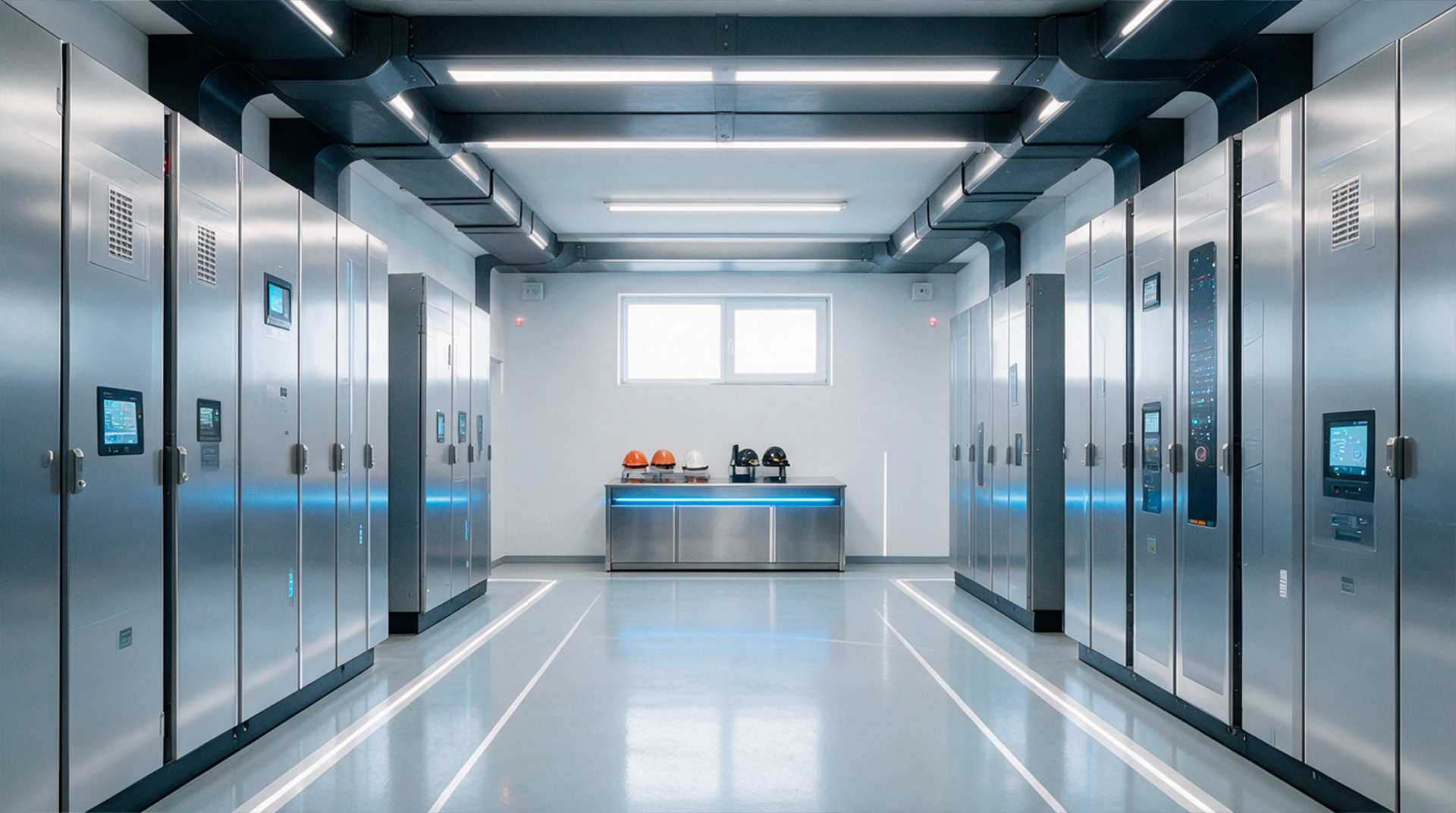
A BESS (or Battery Energy Storage System, in English) it is a type of energy storage system It captures energy from various sources and stores it in rechargeable batteries for future use. Depending on its capacity, measured in Kilovats-hour (kWh), and its power, measured in Kilovats (kW), it can be used to power a large number of applications, supplying energy to homes, vehicles, industrial facilities, and businesses. Although in some cases they can operate independently, they are usually connected to the distribution grid.
What is the difference between BESS and ESS?
Both BESS and ESS are acronyms derived from English that mean Battery Energy Storage System (BESS) or Energy Storage System (ESS) respectively. The main difference between them is that BESS systems use electrochemical batteries as a means of storage, whereas ESS is a more generic term that does not distinguish the medium used to store energy, whether chemical, thermal, kinetic, or gravitational.
What is a BESS for?
Its main function is to store electrical energy for later use when needed. This translates into a contribution of flexibility to the installation that integrates it, whether it be locally or the electrical system to which it is connected, as it allows for efficient balancing of generation and demand.
What benefits does the use of BESS offer?
The use of BESS offers multiple benefits:
- Economic benefit, For example, equipping a photovoltaic installation for self-consumption with storage would allow storing the excess energy for later use when production is low or zero. This allows savings by reducing or avoiding the purchase of energy during periods of high demand and higher prices. Or it also generates revenue by shifting the sale of excess energy to times when the purchase price is higher.
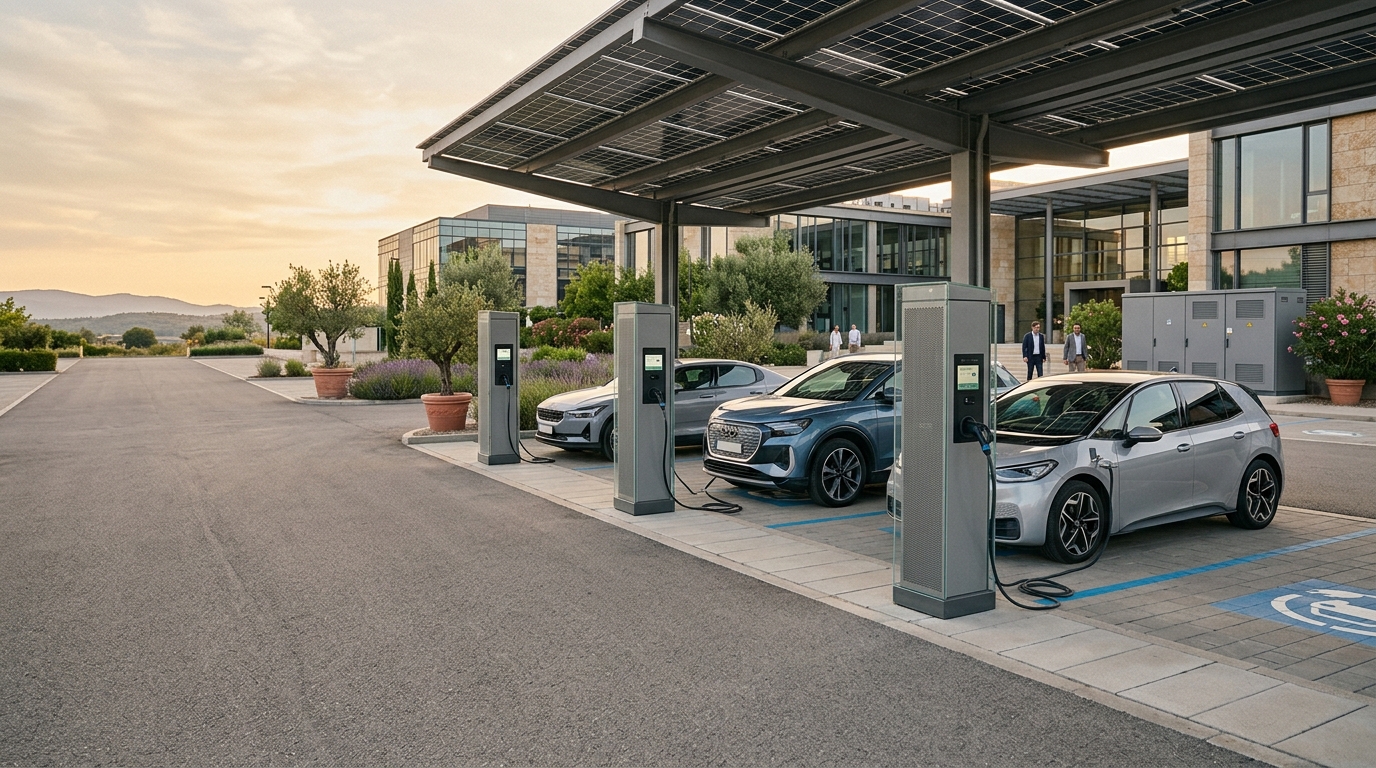
- Technical benefit, For example, using storage to increase the available power at an access point with network congestion or when the increased contracted power requires an expensive expansion of the distribution network infrastructure. This can occur at gas stations/electrolineries, where when they want to incorporate electric vehicle chargers, they find that they do not have enough power to perform quick charges, which has a negative impact on their customers’ charging time.
- Environmental benefits, By allowing for greater utilization of renewable generation, which reduces dependence on fossil fuels. Technically, they are a viable substitute for combined-cycle turbines, which are currently used to support the grid when there are peak demand periods, but which are greenhouse gas emitters. Moreover, compared to other traditional storage methods, such as hydraulic pumping, BESS have a lower environmental impact due to their lower space requirements, lower water consumption, less landscape impact, and less impact on neighboring flora and fauna.
How are BESS storage systems classified?
According to their power, BESS storage systems can be separated into sectors:
- Red, They provide flexibility to the balanced transmission network by providing generation and demand flexibility with powers ranging from 5 MW to hundreds of MW.
- Commercial and Industrial, From 30kW to 5MW. In hospital-type facilities, universities, the public sector or large shopping centers, among others.
- Residential, For domestic applications with powers between 3 and 15 kW. Higher powers may also be available for shared self-consumption or small businesses.
Vector Energy already offers a Residential Storage solution with its range of inverters SUNVEC Hybrids : with monofunctional investors 3, 5 and 7.5kW e Three-phase investors 5, 10 and 15kW versions. Both versions are compatible with two battery models; the SUNBAT-30 3kWh, for configurations up to 12kWh. The SUNBAT-58 5.8 kWh, for configurations up to 23.2 kWh.

The optimal application of a BESS will depend on its size and this is linked to its connection point with the public distribution network:
- In front of the meter: (In-Front-of-the-Meter) For large-scale applications where storage participates in wholesale markets or provides support services (or auxiliary services).
- Behind the Meter: (or Behind-the-Meter) For residential, commercial or industrial applications, where the storage is located within a private network, behind the meter of the Distribution Company.

Why install a BESS in industrial facilities?
The price of energy is a determining factor, especially for large industrial consumers with production processes.
High or unpredictable energy costs affect the competitiveness of the productive plant, which is why more and more companies are implementing energy efficiency measures. In many cases, renewable generation, such as photovoltaic roofs, has been installed to reduce energy costs. The next step is to incorporate storage in these facilities, to obtain the following benefits:
- Greater operational flexibility (using energy when needed)
- Greater utilization of surpluses (reduction in exports)
- Lower transmission losses
- Better network quality
- Greater security of supply.
- Lower carbon footprint
What are the most common batteries in new BESS?
The most common Energy Storage Systems (or SAEs) are those that use electrochemical batteries, particularly with lithium-ion cell based systems due to their energy density and efficiency. The configurations currently used are:
- NMC (lithium-oxide of nickel-cobalt-aluminum or LiNiMnCoO2)
- NCA (lithium-oxide of nickel-cobalt-aluminum or LiNiCoAlO2)
- LTO (lithium titanate or Li4Ti5O12)
- LFP (lithium-iron phosphate or LiFePO4)

The latter, although not the best in terms of technical performance, has satisfactory performance in stationary applications and is one of the safest in terms of thermal stability, as it does not overheat as much and does not release oxygen during combustion. Therefore, its adoption has favored its use in both stationary and electric mobility applications.
What changes are expected for BESS in 2024?
Over the next 12 months, changes are expected in the Spanish electricity market, such as a new Capacity Market, and new storage auctions are also being studied, both for new and existing installations. This will offer new, more stable and predictable repayment paths, which will stimulate investment and the profitability of these technologies.
Eduard Sanz,
Product Manager VECTOR Energy.
More information about BESS SUNVEC Storage
Contact contact us for more information or any questions:
Phone numbers: 935 748 206
Tel. SAT Sunvec: 937 617 771




 Articles